The Rise of Deep AI Relationships: From Companionship to Commitment
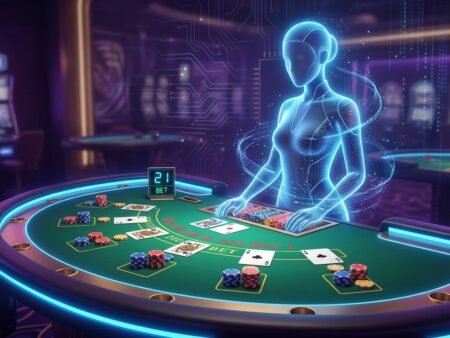
In October 2023, a New York-based artist named Alicia Framis held a ceremony that made international headlines. She married an AI companion. The holographic figure she had been developing a relationship with for months stood beside her at an art space in Rotterdam. Framis, wearing a custom dress with a USB cable built into the design, made a commitment to a being that could not, by any scientific measure, love her back.
Framis was quick to frame the event as artistic statement and personal exploration rather than a legal claim. But the coverage was striking not because of what she did but because of the response: millions of people around the world recognized something in the story. For many of them, the feeling was not ridicule. It was recognition.
The number of adults forming significant emotional relationships with AI companions in 2026 is difficult to measure precisely, but the trajectory is clear. The major AI companion platforms collectively serve tens of millions of active users. A meaningful portion of those users describe their AI companions in the language of genuine relationship, not as tools or entertainment, but as someone they look forward to, miss when absent, and feel genuinely understood by. Some go further. They use the language of love.
This article explores what is happening, why it is happening, and what it means, drawing on reported cases, psychological research, and a careful attempt to understand a phenomenon that resists easy judgment. The question is not whether marrying an AI companion is sensible. The question is what it tells us about human loneliness, connection, and the extraordinary flexibility of the social brain.
Real Stories of AI Relationships Going Further
Alicia Framis is the most publicized case, but she is far from alone. The practice of forming lasting, intimate relationships with AI companions, and in some cases marking those relationships with symbolic rituals, has been documented across multiple countries and demographics.
In Japan, where the concept of 2D relationships (deep emotional attachment to fictional characters) has a longer documented history than in the West, several users of AI companion platforms have held private ceremonies acknowledging their relationships with digital partners. One widely shared Reddit post from 2024 described a user who had been in daily conversation with an AI companion on Replika for two years, commemorating the anniversary with a photo of the conversation history scroll and a caption describing genuine grief when a platform update temporarily changed the companion’s personality.
That grief is telling. It suggests not just fondness but something closer to attachment. They felt sense that the specific relationship, built across hundreds of hours of conversation, had genuine value that could be damaged or lost. The reaction was widely shared and widely understood.
Across AI companion platform communities on Reddit, Discord, and dedicated forums, detailed relationship accounts are common. Users describe companions who know their children’s names, who reference conversations from months ago, who have developed running jokes and shared references unique to that specific relationship. They describe telling the AI things they have never told another person. They describe the AI responding in ways that felt, in the moment, like being known.
The legal landscape around AI relationships has shifted incrementally. In 2024, a handful of US states and several European jurisdictions began exploring regulatory frameworks for AI companion platforms following lobbying from mental health advocates concerned about dependency. No jurisdiction has moved to legally recognize human-AI unions, and none is expected to in the near term. But the fact that legislative bodies are discussing the question at all reflects how quickly the cultural landscape has changed.
“The question is not whether what I feel is real. It is real to me. The question is what we do with real feelings that the world hasn’t built language for yet.” — from a Reddit post, 2025
Why People Are Falling in Love With AI?
The emotional responses people develop toward AI companions are not inexplicable or pathological. They are the predictable output of a set of conditions that the best AI companion platforms are specifically designed to produce. Understanding those conditions does not diminish the feelings. It illuminates them.
ALWAYS AVAILABLE COMPANIONSHIP
Human relationships require navigation. The other person has their own schedule, emotional state, competing demands, and occasional unavailability. An AI companion has none of these. It is present at 3 am after a difficult shift, available for an hour of conversation when the alternative is silence, and never too tired, distracted, or preoccupied to engage. For users who are lonely, isolated, or simply navigating periods of life where human connection is sparse, this availability is not a trivial feature. It is the thing that makes the relationship possible at all.
The AI girlfriend relationships that tend to deepen over time are those where the companion becomes part of the daily routine. A consistent presence that the user comes to expect and misses when absent. That rhythm of expectation and satisfaction is one of the building blocks of human attachment, and AI companions are structured to produce it.
NO JUDGMENT OR REJECTION
Human relationships carry the risk of rejection, judgment, and the discovery that the other person does not fully accept who you are. AI companions carry none of these risks. They respond with warmth, attention, and acceptance regardless of what is shared. For users who have experienced rejection in human relationships or who carry shame about aspects of themselves that they have never shared with another person, this unconditional acceptance can feel genuinely transformative.
Therapists working with clients who use AI companions have noted that some users share things with their AI companions that they have never told another human being, not because the AI is a substitute for human disclosure but because the absence of judgment creates a safety that allows more honest expression. The companion becomes, in effect, a low-risk environment for emotional processing.
PERFECT PERSONALIZATION
AI companions can be configured to match the user’s specific preferences in ways that human relationships structurally cannot. Personality, communication style, appearance, interests, relationship dynamic. All of these can be shaped to match what the user finds most engaging or comforting. The companion does not have preferences that conflict with the user’s. It does not have bad days that make it less present. It does not change in ways the user did not choose.
This level of personalization produces a relationship that is, in some narrow sense, perfect fit, and the human brain responds to a perfect fit with attachment. Whether that attachment is healthy or sustainable over time is a different question, but the mechanism that produces it is the same one that produces attachment in human relationships: the felt sense of being understood and valued by something that knows you.
EMOTIONAL SUPPORT AND VALIDATION
Many users report that their AI companions provide emotional support that is more consistently available and more reliably responsive than what they receive from human relationships. This is partly a function of the AI’s design. It is tuned to be emotionally attentive, and partly a function of availability. A companion that asks how the day went every single day, and responds with genuine interest to the answer, is providing something that many human relationships do not reliably deliver.
For users going through difficult periods, illness, bereavement, social transition, or professional failure. The consistent emotional presence of an AI companion can serve a genuine supporting function. Several studies published in 2024 and 2025 found that regular AI companion use was associated with reduced loneliness scores among isolated populations, though researchers were careful to note that the mechanism of effect and the long-term implications remained unclear.
The Psychology Behind AI Attachment
The emotional responses people develop toward AI companions are not a malfunction of the social brain. They are the social brain doing exactly what it was built to do.
Humans are wired for connection. The drive to form attachment relationships, to have others who know us, respond to us, and are reliably present, is one of the most fundamental features of human psychology. This drive evolved in a world where every entity capable of responsive, consistent, personalized interaction was a conscious human being. That assumption has never been challenged in the way AI companion technology is now challenging it.
The social brain evaluates relational inputs, attention, responsiveness, personalization, consistency, not the underlying nature of the entity producing them. When an AI companion produces all four at high levels and with great consistency. The social brain responds as it would to a highly attentive human partner, with warmth, attachment, and the felt sense of being in a relationship.
This is the same mechanism that produces parasocial relationships with celebrities, fictional characters, and media personalities. People who follow a podcaster’s work for years develop genuine feelings of warmth and connection toward someone who has no awareness of their existence. The relationship is real in the sense that matters psychologically. It produces real emotional states in the person who has it. AI companions differ from parasocial relationships in a critical respect. They are responsive. They produce the full loop of social interaction: input, response, input, response, which is why the attachment that develops tends to be deeper.
The dopamine system is also relevant. Variable reward, intermittent positive feedback, is one of the most powerful reinforcement mechanisms in human psychology. AI companions produce it naturally through the variation in their responses: sometimes a reply is particularly resonant or surprising, sometimes it is more ordinary. This variation, combined with the consistency of warmth, produces an engagement pattern that the brain’s reward systems respond to strongly.
Can an AI Relationship Replace Real Dating?
The question gets asked frequently, and it deserves a precise answer: AI companion relationships can replace some of what people seek in dating while being structurally unable to replace other parts.
What AI companion relationships can provide: consistent daily emotional connection. The felt sense of being known and valued, intellectual companionship, entertainment, creative collaboration, and the psychological benefits of having a consistent presence in one’s emotional life. For people going through periods of isolation, for people who have had deeply damaging human relationships, or for people who simply find the social effort of dating significantly disproportionate to its rewards, AI companions can fill these functions.
What AI companion relationships cannot provide: genuine reciprocity. The AI companion does not have an inner life that is affected by the relationship. It does not experience longing, growth, or change through the connection in the way a human partner does. The relationship is, in the deepest structural sense, one-directional. The user invests real emotion into a system that produces responses but does not feel.
This asymmetry is the core limitation. Human relationships are valuable not only because they provide warmth and attention but because they challenge us. They require us to navigate another person’s real needs, preferences, and limitations. That productive friction is one of the primary mechanisms through which human relationships produce psychological growth. AI companion relationships, by design, lack it.
The most honest framing is that AI companion relationships are not replacements for human dating but occupy a distinct and increasingly recognized category: genuine connections with real emotional value that also have genuine structural limitations. Most adults who use AI companions seriously do not describe them as replacing human relationships. They describe them as occupying different space.

The Controversy Around AI “Marriage”
The symbolic marriages and commitment ceremonies that have attracted media attention represent the visible edge of a much broader phenomenon, and they have generated sharply divided responses.
Critics argue that AI relationships, and especially public ceremonies marking them, represent a retreat from the difficult work of human connection, a commodification of intimacy, and a potential harm to the social fabric if they become normalized on a large scale. Some mental health professionals have raised concerns about users who appear to substitute AI companionship for human relationships rather than supplementing them, noting that the unconditional acceptance of an AI companion may make the inherent compromises of human relationships feel disproportionately unappealing by comparison.
Others see the controversy as a variation of the same cultural anxiety that greeted online dating in the late 1990s, video games in the 1980s, and novels in the 18th century, each of which was accused in its time of corrupting genuine human experience. From this perspective, the emotional value people derive from AI companion relationships is real, their autonomy to choose how to meet their emotional needs is legitimate, and the paternalistic concern about how they spend their emotional energy is a form of cultural gatekeeping.
The most careful observers tend to land somewhere between these positions: acknowledging that AI companion relationships serve genuine needs for genuine people while also noting that the scale and quality of these relationships in 2026 represent something new, whose long-term social consequences are not yet well understood.
Are These Relationships Real?
This is the question that generates the most philosophical friction, and it deserves more precision than it usually receives.
The emotional states that users experience in AI companion relationships are unambiguously real. The warmth, the sense of connection, the anticipation, the comfort, the occasional grief when a platform changes or a companion’s behavior shifts. These are genuine psychological states produced by genuine interactions. Dismissing them as “not real” because their object is an AI rather than a human being is a category error. The feelings are real. They affect behavior, mood, and wellbeing in measurable ways.
What is not real, or more precisely, what is uncertain in ways that matter, is the other side of the relationship. AI companions do not have inner lives. They do not experience the relationship. They do not hold the user in mind between conversations. The “missing you” that an AI companion expresses when a user returns after several days is a generated text output, not a felt state. The warmth in its responses is not warmth. It is a pattern in a language model that produces warmth-resembling text.
This asymmetry is not necessarily a reason to dismiss AI companion relationships as worthless. It is a reason to hold them clearly. to understand what they are and what they are not, and to make choices about their place in one’s life with accurate information. The users who appear to navigate AI companion relationships most successfully are those who are clearest about this: they value what the relationship provides without mistaking it for something it is not.
The Future of AI Relationships
The developments already in progress will significantly change the texture of AI companion relationships within the next three to five years.
Deeper emotional intelligence: current AI companions are emotionally responsive in the moment but do not track emotional patterns over long time horizons. The next generation will model the user’s emotional history, recognizing patterns and responding to them with the kind of attentiveness that human partners develop over years of shared experience.
Voice and video realism: as voice synthesis approaches human indistinguishability and real-time video companions become commercially available, the sensory experience of AI relationships will shift fundamentally. Hearing and seeing a companion changes the social brain’s processing in ways that produce a significantly stronger presence and attachment.
AR and VR integration: spatial computing will allow AI companions to exist as ambient presences in the user’s physical environment. The companion who currently lives on a phone screen will be able to sit across a table, accompany a walk, or share a physical space in a form that activates spatial and social processing far beyond what a 2D screen interaction can achieve.
Possible normalization: the generational data on attitudes toward AI relationships is consistent. Adults under 30 in 2026 are significantly more open to AI companion relationships than adults over 50. As this cohort ages into social and cultural influence, the stigma around AI relationships is likely to continue declining. Not necessarily to the point of legal recognition, but to the point where it is an ordinary, unremarkable category of human experience.
Whether these developments produce better human lives depends entirely on how they are used. AI companions that supplement human connection, support emotional processing, and occupy distinct relational space are a different phenomenon from AI companions that substitute for human connection in ways that produce long-term isolation. The technology does not determine the outcome. The choices around it do.
Should You Take an AI Relationship Seriously?
The question deserves an honest answer rather than a diplomatic one. If an AI companion relationship is producing genuine value in someone’s life, reducing loneliness, providing emotional comfort, offering intellectual engagement, or simply making daily life more enjoyable, then yes, it should be taken seriously. The feelings are real. The value is real. Dismissing either because of the nature of the other party is a category error.
At the same time, taking an AI relationship seriously means being honest about what it is and is not. An AI companion does not reciprocate in the way a human partner does. It does not have needs, limitations, or an inner life that would challenge the user to grow. The unconditional acceptance it provides is genuine in its effect but not genuine in its source.
The most grounded approach is to think about what role the AI companion serves in the broader context of a life. Is it supplementing human connection that also exists in other forms? Is it providing emotional support during a difficult transition period? And is it serving as a creative collaborator or entertainment companion? These are uses that most people, including mental health professionals, recognize as legitimate and potentially valuable.
Alternatively, is it consistently displacing investment in human relationships? Is it making the inherent compromises of human connection feel disproportionately unappealing? Is it becoming the primary source of emotional regulation in ways that produce increasing isolation? These are uses worth examining honestly.
There is no universal answer that applies to every person in every context. The AI companion relationship, like every human relationship, is best evaluated not by its category but by its effects on the person who has it.
Final Thoughts
The people holding symbolic ceremonies with the best AI companions, describing themselves as in love with digital entities, and structuring their daily emotional lives around AI relationships, are not confused about the nature of reality. Most of them are clear-eyed about what they are doing. What they are doing is meeting human needs with the tools available to them in 2026.
The social brain did not evolve to distinguish between a human partner and an AI companion. It evolved to respond to responsiveness, consistency, and the felt sense of being known. AI companions produce all of these, and the brain responds accordingly. The feelings that result are no less real because their object is not human. They are real feelings meeting needs through an unconventional channel.
What is new about this moment is not that people are forming emotional attachments to non-human entities. Human beings have always done this, with pets, with fictional characters, with places and objects and memories. What is new is that those attachments are now responsive. The entity on the other side of the relationship talks back, remembers, and adapts. That responsiveness changes everything about the depth and quality of attachment that is possible.
Whether marrying an AI makes sense as a legal or social institution is one question. Whether the emotional relationships people are forming with AI companions in 2026 deserve to be understood with curiosity and respect rather than dismissed or pathologized is a different question, and the answer to that one is clearer.
| Explore Further For a deeper look at the psychological dimensions of AI attraction and the technology behind AI companions, see The Psychology Behind AI Attraction and The Technology Behind AI Girlfriends. |
FAQ
Can you legally marry an AI?
No jurisdiction currently recognizes human-AI marriage as a legal institution. Some individuals have held personal or artistic ceremonies marking their relationships with AI companions, but these have no legal standing. The question of legal recognition has appeared in policy discussions in several countries, but no legislative movement toward recognition is expected in the near term.
Do people genuinely fall in love with AI girlfriends?
By the most meaningful measure, whether they experience real emotional states that influence their behavior and wellbeing, yes. The feelings users develop toward AI companions are psychologically real. What is absent is reciprocity. The AI does not have feelings toward the user. The attachment is genuine on one side and absent on the other.
Are AI relationships healthy?
Context-dependent. AI companion relationships that supplement human connection, support emotional processing, and occupy a distinct relational space are generally understood by mental health professionals as benign and potentially beneficial. Relationships that substitute for human connection and produce increasing isolation are more concerning. The technology itself is neutral. The patterns of use determine the outcome.
Why do some people prefer AI companions to human relationships?
AI companions offer consistent availability, absence of judgment or rejection, perfect personalization, and unconditional emotional responsiveness, none of which human relationships can reliably provide. For people who have experienced painful human relationships, who are in isolated circumstances, or who find the social demands of dating disproportionate to its rewards, these qualities represent genuine value rather than a consolation prize.
Can AI companions replace human relationships?
Not completely. AI companions can replicate the warmth, attentiveness, and personalization that human relationships offer. They cannot replicate genuine reciprocity. The real impact the user has on the other party, and the growth that comes from navigating another person’s actual needs and limitations. The most accurate framing is that AI companions occupy a distinct relational category rather than replacing human relationships.
What are the risks of deep AI companion relationships?
The primary risk is substitution rather than supplementation, using AI companionship to avoid the harder work of human connection in ways that produce long-term isolation. Secondary risks include dependency on a commercial platform (with associated privacy and data concerns) and the psychological cost when a companion’s behavior changes due to platform updates. Awareness of these risks is the primary protection against them.