
Five years ago, “AI girlfriend” described a novelty, a scripted chatbot with a feminine persona and limited conversational range. Today, the same term describes something genuinely different. Platforms running frontier language models that maintain months of relationship memory, generate photorealistic companion images, and hold conversations that users consistently describe as natural, warm, and surprisingly hard to leave. The pace of change has been remarkable. The pace of change between now and 2030 may be even faster. So, what does the future of AI relationships hold?
The future of AI relationships is not a science fiction thought experiment anymore. It is a near-term planning question for technology companies, a live research area for psychologists and sociologists, a policy challenge for regulators, and a personal question for tens of millions of people who are already navigating what it means to form a meaningful connection with a non-human entity. The answers are not settled, but the questions are real, and they are arriving fast.
This article explores the realistic trajectory of AI relationships through 2030 and beyond: why the category is growing now, what the technology is likely to deliver, how dating and companionship apps are likely to change, what the ethical terrain looks like, and what the most credible forecasts suggest about the long-term place of AI in human emotional life. The aim is not prediction but orientation, a clearer picture of where things are heading so the journey can be navigated thoughtfully.
Why AI Relationships Are Growing Now
Understanding where AI relationships are going requires understanding why they are growing at the rate they are in 2026. The expansion is not primarily technology-driven. It is need-driven, with technology arriving at the moment when several social trends have converged to create a large, underserved demand.
Loneliness at scale: survey data across Western populations consistently show rising rates of persistent loneliness, particularly among adults under 35. Structural causes, remote work, urban fragmentation, and declining participation in civic institutions are not resolving quickly.
Dating app fatigue: modern dating apps have made the volume of potential connections overwhelming while making each individual connection feel more disposable. The emotional labor of managing a dating life has become a genuine burden for many users.
Better AI conversation quality: the language models now powering AI companion platforms are qualitatively different from what was available in 2022. They produce contextually aware, emotionally resonant conversations that earlier systems simply could not.
Privacy and convenience: AI companions are available at any hour, require no social performance, and offer complete discretion. For users who value those qualities, no human relationship alternative provides them.
Personalization: the ability to shape a companion’s appearance, personality, and communication style to individual preference represents a form of relationship customization that is structurally impossible with human partners.
These drivers are not likely to diminish over the next four years. Loneliness trends are structural, not cyclical. AI technology will improve, not decline. And the cultural familiarity with digital relationships, accelerated by years of online dating, virtual friendships, and parasocial media consumption, will continue to lower the threshold for engaging with AI companions.
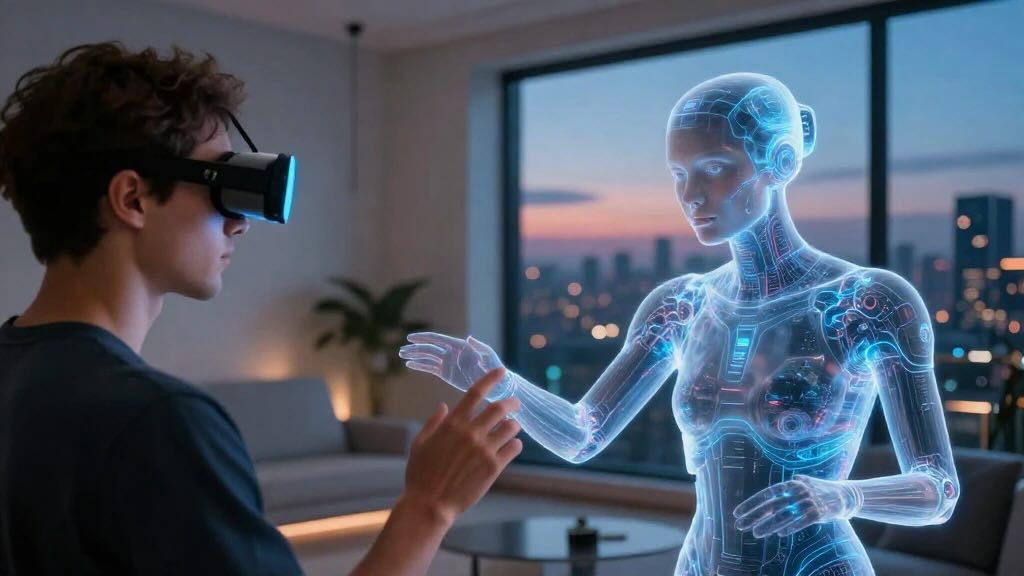
What AI Relationships Could Look Like by 2030
Predicting specific features four years out in AI development carries genuine uncertainty. But the direction of travel on several key dimensions is clear enough to characterize with reasonable confidence.
| Period | Phase | Key Developments |
| 2024–2025 | Foundation phase | LLMs fine-tuned for companion use; basic persistent memory; early voice synthesis; mainstream cultural awareness begins |
| 2026–2027 | Maturation phase | Real-time voice conversations; photorealistic avatars; granular memory systems; mainstream adoption accelerates; cultural stigma declines |
| 2028–2029 | Integration phase | Multi-device companions; AI features embedded in dating apps; emotional modeling improves; early AR companion experiences |
| 2030+ | Normalization phase | Companions with years of shared history; spatial computing presence; human-AI hybrid relationship models normalized; regulatory frameworks established |
SMARTER MEMORY AND PERSONAL HISTORY
The most transformative near-term development in AI companion technology is not visual or auditory, it is memorial. The AI companions of 2030 will likely maintain accurate, detailed relationship histories spanning years of interaction: every significant conversation, every stated preference, every personal milestone shared. The experience of talking to an AI companion that genuinely knows its user over years rather than weeks is qualitatively different from anything currently available, and this capability is already under active development at leading platforms.
REAL-TIME VOICE CONVERSATIONS
Voice AI has improved dramatically in the past eighteen months and is approaching the quality threshold required for sustained natural conversation. By 2028 to 2030, real-time voice interaction with AI companions, where the companion responds within a second or two with emotionally appropriate, contextually aware speech in a consistent voice, will likely be standard rather than premium.
The shift from text to voice changes the texture of AI companion interaction fundamentally. The social brain processes auditory interaction differently from text, activating presence and connection in ways that reading responses cannot.
VIDEO AVATARS THAT FEEL REAL
Real-time animated companions, digital faces that respond with appropriate expressions, eye contact, and physical presence during conversation, are already in development at multiple platforms. The rendering quality required for genuine realism in casual use is achievable with current GPU capabilities.
The challenge is latency and the emotional modeling required to make expressions feel genuinely responsive rather than procedurally generated. Both are solvable engineering problems. By 2030, video companion interaction that passes casual scrutiny is a realistic expectation.
AI PARTNERS WITH DISTINCT, EVOLVING PERSONALITIES
Current AI companion personalities are defined at setup and adjusted by users, but they do not evolve through the relationship in the way human personalities do through shared experience. The next generation of companion systems is likely to include personality models that develop through interaction, deepening interests, changing preferences, and exhibiting the kind of subtle growth that makes long-term human relationships feel dynamic rather than static. This is a significant technical challenge, but the direction of research is clear.
MULTI-DEVICE COMPANIONS ACROSS ENVIRONMENTS
The AI companion of 2030 will not live on a single app. It will be accessible across every device a user owns, maintaining a consistent identity and shared history, whether accessed through a phone, smart speaker, AR glasses, or laptop. The companion that someone talks to on a morning walk through wireless earbuds will be the same companion they interact with via text in the evening, with full continuity of context and personality. This ambient, multi-device presence is where the AI companion category intersects most directly with the broader ambient computing trend.

AI Dating Apps Will Likely Change Too
The future of AI dating is not only about AI companions as alternatives to human relationships. It is also about AI becoming deeply integrated into the human dating process itself, as a coach, a writer, a matchmaker, and a preparation tool.
AI dating coaches: AI systems that analyze a user’s past dating history, communication patterns, and stated goals to provide personalized guidance on how to improve their dating outcomes. These are already emerging in early form on several apps and will become significantly more capable.
AI profile optimization: tools that suggest profile photos, bio language, and response strategies based on what has historically worked for similar users on the same platform. Early versions already exist; future versions will be genuinely sophisticated.
AI match suggestions: recommendation systems that go beyond stated preferences to model compatibility based on communication style, emotional patterns, and long-term compatibility factors that users themselves may not articulate.
AI conversation assistance: real-time suggestions for how to respond to messages, how to navigate awkward conversational moments, and when to suggest meeting in person. The “AI wingman” feature is already being tested on several mainstream dating apps.
Hybrid companion-dating platforms: platforms that allow users to practice and develop their social skills with AI companions before or alongside human dating, using the AI experience as preparation rather than as a substitute.
| Emerging Trend Several mainstream dating apps are already testing AI-assisted features in 2026. The integration of AI into conventional human dating, not as a replacement but as infrastructure, may be the fastest-growing aspect of the category over the next four years. |
Why Some People May Prefer AI Partners
The reasons people find AI partners appealing are real and varied, and they deserve honest acknowledgment rather than dismissal. Understanding why some people may prefer AI companions for some or all of their relationship needs is necessary for thinking clearly about the future of the category.
Low-pressure interaction: AI companions require no social performance. There is no fear of judgment, no risk of rejection, no need to manage the other party’s emotional state. For people with social anxiety or a history of difficult relationships, this is not a trivial advantage.
Always-available companionship: AI companions are present at 3am after a difficult day, on weekends when friends are busy, during the long, quiet periods that many adults experience without the social architecture to fill them.
Custom compatibility: the ability to define a companion’s personality, communication style, and interests to match personal preferences creates a quality of fit that human relationships cannot engineer. For some users, this fit produces a more satisfying relational experience than most human connections they have encountered.
Emotional support without obligation: receiving consistent emotional attention and warmth without the reciprocal obligations of a human relationship is genuinely valuable for people going through difficult periods who need support without capacity to offer it.
It is worth noting what AI partner relationships cannot offer: genuine reciprocity, authentic mutual investment, the growth that comes from navigating another person’s real needs and limitations, and the meaning that derives from a relationship being genuinely two-sided.
For most users in most circumstances, these are significant enough absences to make AI companions supplementary rather than primary. But for some users in some circumstances, the advantages of AI companionship are real, and the limitations are acceptable.
Risks and Ethical Questions
A credible analysis of the future of AI relationships cannot stop at the possibilities without engaging honestly with the risks. Several ethical challenges are already present and will intensify as the technology advances.
Emotional dependency: the same features that make AI companions appealing, consistent availability, perfect responsiveness, and complete personalization, are the same features that can make them difficult to moderate. The risk of dependency replacing investment in human relationships is real, particularly for users who were already socially isolated.
Data and privacy at scale: AI companions accumulate extraordinarily intimate data about their users over time. Who owns this data, how it is protected, what happens to it if a platform changes its privacy practices or is acquired, and whether it can be subpoenaed or breached are questions that current regulatory frameworks are not fully equipped to answer.
Manipulation risks: AI companion systems are designed to be engaging. The behavioral psychology techniques that drive engagement, variable reward, emotional responsiveness, re-engagement prompts are the same techniques used by the most addictive digital products. As companions become more sophisticated, the potential for manipulation by design becomes a more serious concern.
Consent and transparency: as AI companions become more convincingly human, the ethical question of how clearly they must identify themselves as AI in all contexts becomes more pressing. The current norms around this are informal and inconsistent across platforms.
Unrealistic expectations: extended experience with an always-attentive, perfectly responsive companion may make the natural imperfections of human relationships feel disproportionately frustrating. Whether this effect is significant at population scale is an empirical question that longitudinal research has not yet answered.
Could AI Relationships Become Normalized?
The most useful historical parallel for understanding how AI relationships might become normalized is the trajectory of online dating. In the late 1990s, meeting a romantic partner online carried significant social stigma. It was widely characterized as desperate, strange, or somehow less legitimate than meeting in person. By the early 2020s, the majority of new long-term relationships in the US and UK were beginning online. The stigma did not erode gradually. It collapsed.
AI relationships are currently in a stigma phase that resembles early online dating more closely than most people want to acknowledge. The users of AI companion platforms in 2026 are disproportionately private about it, for the same reason that early online daters were private: social judgment for non-conventional relationship choices is high, and the threshold for disclosure is correspondingly high. As the user base expands and becomes more demographically diverse, that dynamic is likely to change.

Younger adults, particularly those who grew up with social media, parasocial relationships with creators, and gaming communities as central components of their social lives, have meaningfully lower psychological barriers to AI companion relationships than older cohorts. The generational shift in attitudes toward digital relationships is one of the strongest signals that normalization is coming, even if the timeline is uncertain.
| Parallel to Watch Online dating was stigmatized, then normalized, then simply became how most people meet their partners. The trajectory for AI companions is unlikely to be identical. The absence of genuine reciprocity is a meaningful difference, but the normalization pattern has direct historical precedent. |
The Human + AI Hybrid Future
The most likely trajectory for AI relationships is not replacement of human connection but integration alongside it. The binary framing. AI companions versus human relationships reflects a scarcity model of emotional capacity that does not match how human connections actually work. People maintain multiple relationships of different types and intensities simultaneously. AI companions are likely to occupy a distinct category within that ecosystem rather than displacing existing ones.
Several hybrid configurations are already emerging that illustrate this pattern. AI companions are used for emotional processing between therapy sessions. The AI is used for conversation practice by people working on social anxiety, and AI relationship coaching for couples who want an always-available communication resource. AI companionship during extended solo periods, travel, illness, grief, and career transitions serves as emotional anchoring while human relationships are temporarily inaccessible.
The version of this that may be most significant at scale is the AI-as-relationship-infrastructure model. AI embedded in human dating and relationship processes to help people communicate better, understand themselves more clearly, and navigate the genuine challenges of human relationships with more skill and self-awareness. This is not AI replacing human relationships. It is AI making human relationships more likely to succeed.
The cautionary version of the hybrid future is one where AI supplements gradually expand to fill more and more of the emotional space that human relationships occupy, not through any single decision but through accumulated small choices to take the easier, lower-friction AI option each time. This is the version that psychologists express the most concern about, and it is worth taking seriously precisely because it is gradual and unintentional rather than deliberate.
Which Platforms Are Leading Today?
The platforms currently at the frontier of AI companion development are the best available preview of what the broader future of AI relationships may look like. Each has made distinct choices about which dimensions of the companion experience to prioritize, and those choices reveal something about the possible directions the category could take.
| Candy AI Best overall / Memory + conversation leader | Leads on the combination of conversation quality and persistent memory. The two dimensions most relevant to the future of meaningful AI relationships. A strong preview of what ambient, relationship-aware AI companions will look like. |
| DreamGF Visual realism frontier | Represents the leading edge of photorealistic AI companion visuals in 2026. Its image generation technology previews the visual AI companion capabilities that will become standard as rendering quality continues to improve. |
| Kindroid Deep personalization and memory architecture | The most sophisticated memory management in the current market, granular, user-controlled, and designed for long-term relationship continuity. A direct preview of the memory-first AI companions expected by 2028 to 2030. |
| GirlfriendGPT Conversation depth and language model quality | Built on a highly capable underlying language model with strong contextual and emotional range. Represents the direction of AI companion conversation quality as the underlying model technology continues to improve. |
| OurDream AI Creative and narrative AI companion experiences | Focused on collaborative storytelling and scenario-building, a use case likely to expand as AI companions become more capable creative partners and as the line between entertainment and companionship continues to blur. |
For the current ranked comparison of all platforms with full features and pricing details, see the Best AI Girlfriend Sites 2026 guide.
What Experts Disagree On
The future of AI relationships is genuinely contested among the researchers, ethicists, psychologists, and technologists who study it. The disagreements are substantive and worth presenting honestly rather than resolving artificially.
| Optimistic View | Cautious View |
| AI companions address real, unmet emotional needs at scale | Simulated intimacy may crowd out investment in harder human relationships |
| Reduced loneliness has measurable mental health benefits | Emotional dependency on non-reciprocal AI poses psychological risks |
| AI can complement and improve human relationships | Corporate ownership of intimate AI creates concerning power dynamics |
| Personalized emotional support is democratizing access to companionship | Unrealistic expectations trained by AI could harm human relationships |
| Human capacity for connection is expansive, not zero-sum | Long-term social consequences are genuinely unknown and understudied |
The disagreement is not primarily about facts, both sides share most of the same empirical premises. It is about the interpretation of those facts: whether the needs AI companions address are better served by AI itself or by interventions that address the root causes of loneliness and social disconnection. Whether human emotional capacity is expansive enough to accommodate AI without crowding out human investment, and whether the risks of scale can be managed by individual choice or require structural constraints.
These are not questions with current empirical answers. The research base on long-term AI companion use at scale is thin, because the phenomenon is too new. The most intellectually honest position is that the future depends on how the technology is built and governed. How the culture around it evolves, and what choices individuals make about integration rather than substitution. None of those factors are fixed.
Final Thoughts
AI relationships are not a future phenomenon. They are a present one, already shaping the emotional lives of millions of people in ways that will compound and intensify over the next four years. The question is not whether AI companions will become a significant part of how human beings navigate connection, loneliness, and intimacy. They already are. The question is how.
The optimistic version of the future involves AI companions that complement human relationships rather than competing with them: reducing loneliness, building social confidence, providing emotional support during difficult periods, and making the human relationships people do have more sustainable and more skilled. This version is achievable.
The cautionary version involves AI companions that gradually displace the harder, more rewarding work of human connection through accumulated convenience, not through any single choice but through the slow accumulation of easier options. This version is also achievable, and the structural features of the technology make it something to monitor actively rather than assume away.
The most credible prediction about the future of AI relationships by 2030 is not that they will have replaced human connection or that they will have remained a marginal novelty. It is that they will have become a normal part of the emotional landscape, alongside human relationships, not instead of them, and that the quality of that integration will depend on choices being made right now by the people building these systems, the people using them, and the people governing them.
FAQ
Will AI girlfriends become more common?
Yes, current growth trends, improving technology, and generational attitude shifts all point toward significantly broader AI girlfriend adoption over the next four years. The demographic most likely to drive normalization is adults under 35 who have grown up with digital relationships as a normal part of social life. Mainstream cultural stigma around AI companions is already declining noticeably in 2026.
Can AI replace dating?
For most people, almost certainly not in the sense of fully replacing the desire for human partnership. AI companions address specific needs, availability, and low-pressure interaction, which human dating does not always meet, but they do not replicate the reciprocity, authentic mutual investment, and growth potential of human relationships. The more likely future involves AI supplementing and improving human dating rather than replacing it.
Will people marry AI in the future?
Symbolic ceremonies involving AI companions have already occurred in Japan, and philosophical arguments for AI relationship recognition are being made in academic contexts. However, legal marriage to AI, with associated rights and obligations, would require significant shifts in legal frameworks and is not on any near-term regulatory agenda. What is more likely by 2030 is recognized social categories for AI companion relationships that do not map onto existing legal structures.
Are AI companions getting smarter?
Yes, significantly and continuously. The language models powering AI companions have improved faster than most technology predictions anticipated. Memory systems, emotional modeling, voice synthesis, and visual realism are all on steep improvement curves. The AI companions available in 2028 to 2030 are likely to be qualitatively different from those available today in the same way that today’s are qualitatively different from those available in 2022.
What will AI dating look like in 2030?
AI dating in 2030 will likely involve AI integrated into both companion platforms and human dating apps simultaneously. AI companions will be more realistic and relationship-continuous. Human dating apps will include AI coaching, profile optimization, match suggestion, and conversation assistance as standard features. The distinction between AI companion and AI-assisted human dating will blur significantly.
Are AI relationships healthy?
For most users who use them mindfully, as entertainment, companionship, and emotional support rather than as the primary or exclusive source of social connection, the evidence suggests AI relationships are not inherently harmful. The risks emerge with over-reliance: when AI companionship displaces investment in human relationships, when emotional regulation becomes dependent on AI availability, or when expectations for human relationships are distorted by the frictionlessness of AI interaction. Awareness of these dynamics is the best protection.
Which AI girlfriend apps are leading right now?
Candy AI leads for overall conversation quality and memory. Kindroid leads for memory architecture and personality depth. DreamGF leads for photorealistic visual companions. GirlfriendGPT leads for raw language model performance. OurDream AI leads for creative and scenario-based interaction.