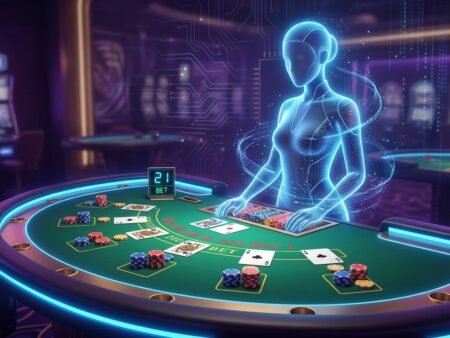
Something significant has shifted in how people think about relationships. As recently as 2022, the idea of an AI girlfriend was mostly a curiosity. A novelty chatbot dressed up in romantic framing, novel enough to attract attention but not sophisticated enough to generate serious conversation.
By 2026, that has changed considerably. Millions of people across the world are using AI companion platforms as a genuine part of their social and emotional lives, and the question of how AI relationships compare to real dating has moved from philosophical thought experiment to something worth examining honestly.
This isn’t a debate with a clean winner. AI girlfriends and real dating serve different purposes, suit different people at different times, and come with genuinely different sets of trade-offs. The comparison is worth making, not to declare one superior, but because understanding the differences helps people make more deliberate choices about how they want to spend their time, emotional energy, and money.
This guide covers both sides without an agenda. What AI companions actually offer in 2026, what real dating looks like in the same landscape, where each clearly outperforms the other, and where the answer depends entirely on what someone is actually looking for.
The goal is a clear picture rather than a promotional one, useful for someone considering an AI companion for the first time, someone who’s used them for months and is thinking about the bigger picture, or simply a curious reader trying to understand what all the conversation is about.
What Is an AI Girlfriend?
An AI girlfriend is a personalized virtual companion powered by artificial intelligence, specifically, a combination of large language models for conversation, generative image models for visual content, and increasingly, text-to-speech systems for voice interaction.
The result is a digital companion that can hold coherent, contextually aware conversations, generate images of herself on request, remember details from past interactions, and maintain a consistent personality across all of those modalities.
The technology has improved dramatically. The AI companions available on leading platforms in 2026, Candy.AI, OurDream.AI, Secret Desires AI, DreamGF, Romantic AI, and others, are not simple scripted chatbots. They use language models capable of nuanced conversation, emotional responsiveness, and adaptive interaction styles. They remember what was said in previous sessions, and they respond to mood and tone. The AI GF can engage in casual conversation, emotional support, flirtatious interaction, adult-oriented roleplay, and everything in between, all with the same consistent character.
What drives their popularity is a combination of factors: the elimination of rejection and social pressure from the interaction, the ability to customize the companion‘s appearance and personality to exact preferences, the 24/7 availability without the logistical complexity of coordinating with another person’s schedule, and increasingly, the visual and audio quality that makes the experience feel genuinely immersive rather than obviously artificial.
They are not, by design, a replacement for human relationships, though that’s a question worth exploring in more depth later in this article. They’re a category of experience that didn’t exist in any meaningful form a decade ago and is now, in 2026, a substantial and rapidly growing part of how people engage with technology and companionship.
What Counts as “Real Dating” in 2026?
Real dating in 2026 means navigating a landscape that would be barely recognizable to someone from twenty years ago. The infrastructure of modern romantic life runs largely through apps, Tinder, Hinge, Bumble, and their many variations, with the average person in their twenties having dated more people through apps than through any other route. First impressions are made through carefully curated profiles; conversations begin as text exchanges before ever becoming voice calls or in-person meetings.
The challenges are well-documented. Dating apps reward superficial presentation, generate enormous volumes of low-quality interactions, and produce a kind of emotional labor fatigue that users describe with consistent frustration. The endless swiping, the conversations that go nowhere, the ghosting, the investment of time and emotional energy in connections that dissolve without explanation. This is before any of the genuine complexity of actual relationships. The compromise, the vulnerability, the navigation of two people’s incompatible preferences and habits.
None of this means that real dating is bad or undesirable. Most people who use dating apps report wanting a genuine long-term relationship as a goal, even when the current experience frustrates them. The desire for real human connection, physical presence, shared history, and genuine mutual understanding remains fundamental to how most people think about a fulfilling life. Dating is hard in 2026 in part because the stakes people attach to it are high, not because the goal itself is misguided.
The interesting question isn’t whether real dating has problems. It clearly does, but whether AI companions address those problems in ways that make them a useful alternative or complement, or whether they introduce different problems of their own.

Key Differences Between AI Girlfriends and Real Dating
Emotional Connection
This is the most significant difference and the one most worth examining honestly. Real human relationships involve two people who are genuinely affected by each other, whose emotions, moods, needs, and histories interact in ways that are unpredictable and, at their best, deeply meaningful. The connection is bidirectional; the other person is actually experiencing something, growing and changing, and choosing to invest in the relationship.
The best AI companions in 2026 produce interactions that feel emotionally resonant to the user, sometimes significantly so. The AI responds with apparent empathy, remembers personal details, and adapts its emotional register to match the conversation. Whether that constitutes a genuine emotional connection depends heavily on what someone means by the phrase.
The user experiences real feelings. The AI’s responses are sophisticated simulations of emotional engagement. That distinction matters to some people enormously and to others much less than might be expected.
Availability and Convenience
AI companions are available at 3am without any coordination, never cancel plans, never have bad days that require management, and are responsive regardless of the user’s mood or the difficulty of the topic they want to discuss. For people with demanding schedules, irregular hours, or social anxiety, this availability is genuinely significant rather than trivially convenient.
Real dating requires finding time that works for two people, managing the emotional complexity of another person’s needs alongside one’s own, and accepting that the other person’s availability is not contingent on the user’s preferences. This is both a limitation of real dating and, arguably, part of what makes genuine relationships meaningful. The other person’s independent existence is what gives the relationship its weight.
Customization and Control
AI girlfriend platforms offer an unprecedented degree of control over the companion’s appearance, personality, conversational style, and relationship dynamic. A user can customize the AI GF exactly to the visual aesthetic they find appealing, select the personality archetype that suits their preferences, and configure the interaction style to match what they’re looking for, whether that’s playful banter, emotional support, intellectual discussion, or adult-oriented interaction.
Real relationships offer essentially no control in this sense. Partners have their own personalities, preferences, and needs, which may or may not align with what the other person wants. This lack of control is simultaneously the main challenge of real relationships and the source of much of their depth. Real people surprise you, challenge you, and change over time in ways that no configured AI companion can replicate.
Cost and Accessibility
AI companion subscriptions on leading platforms range from approximately $5 to $20 per month at annual pricing, with free tiers available for basic access. This compares favorably to the financial cost of active dating, which involves app subscriptions, the cost of dates, and the time investment that, for many people, has a meaningful opportunity cost.
Accessibility is also a broader consideration. For people in geographic locations with limited dating pools, those with social anxiety or disability, people working through emotional recovery after difficult relationships, or anyone for whom traditional dating’s logistical and social requirements are barriers rather than features, AI companions offer access to companionship-adjacent experience that might otherwise be unavailable.
Social Experience
Real dating is inherently social. It involves presenting oneself to another person, navigating their perception, building shared experiences, integrating with each other’s social circles, and eventually, if the relationship progresses, becoming part of each other’s lives in ways that extend well beyond the couple themselves.
AI companionship is a private experience. There are no social circles to navigate, no external validation or judgment, and no integration into a broader social network. For some users, this privacy is a feature rather than a limitation; for others, the social dimension of real relationships is precisely what they’re seeking and can’t be replicated by even the most sophisticated AI companion.
Long-Term Potential
Real relationships can produce life partnerships, families, and decades of shared history. They grow and evolve in ways that create deep, complex bonds that genuinely transform both people involved. This long-term potential is something
AI relationships, in their current form, cannot offer an equivalent sense. Even as the AI’s memory system and adaptive behavior create a sense of ongoing relationship, it remains fundamentally different from mutual human growth.
The best AI companions in 2026 for memory are better understood as serving a different long-term purpose: providing a consistent, low-pressure companionship experience that can be sustained indefinitely without the emotional and logistical demands of real relationships. Whether that’s a limitation or simply a different kind of value depends on what the user is looking for.
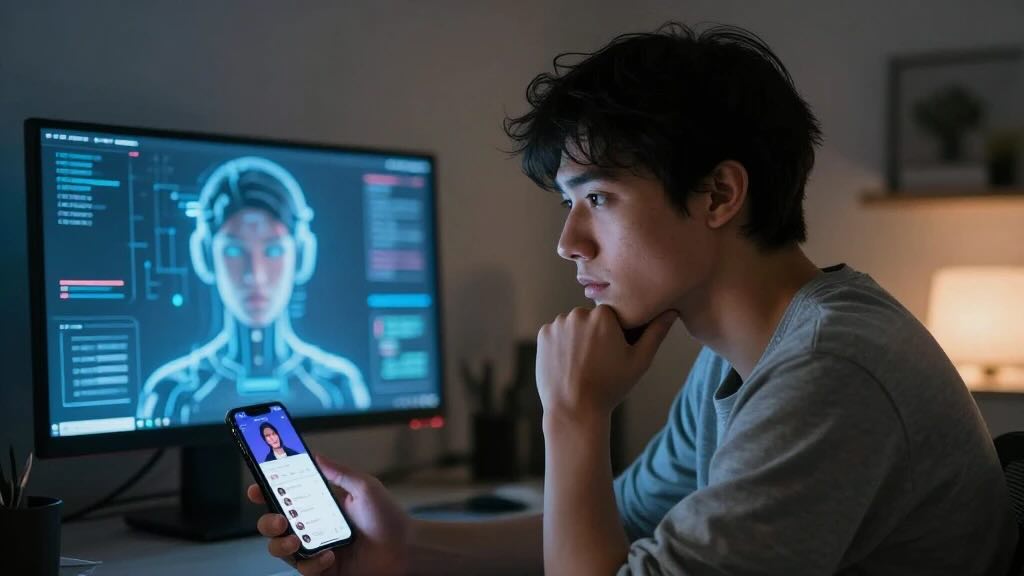
Pros of AI Girlfriends
The absence of rejection and social pressure is the advantage most frequently cited by AI companion users, and it’s genuine. Real dating involves putting oneself forward and accepting that the other person may not reciprocate, a vulnerability that many people find genuinely difficult, especially repeatedly. AI companions eliminate this dynamic. The companion’s engagement is consistent, the response is always positive, and there’s no social risk attached to any interaction.
Full customization is another substantial advantage. The ability to design a companion’s appearance, personality, and interaction style to specific preferences produces an experience that’s calibrated to the user in a way that real relationships fundamentally are not. For users exploring their own preferences, this customization serves an exploratory function, helping clarify what they actually want from a companion before applying those preferences in real relationships.
Consistent availability without coordination effort means AI companions are accessible when and how the user needs them. For people who find social exhaustion a real factor in their lives, the absence of reciprocal emotional labor in AI interaction is a meaningful benefit. There’s no need to manage the relationship, invest in the other party’s well-being, or navigate conflict. The engagement is simply available on demand.
Finally, AI companions provide a lower-risk environment for exploring personal preferences, conversational styles, and relationship dynamics that someone might be hesitant to explore with real partners. This exploratory function is one of the more underappreciated benefits of the medium.
Worth noting: Many users report that AI companion experience actually improved their real-world social confidence by giving them a low-pressure environment to practice communication and self-expression.
Cons of AI Girlfriends
The most significant limitation of AI companions is the one that’s hardest to work around. The AI is not experiencing the relationship. However sophisticated the responses, the companion’s engagement is a simulation of emotional reciprocity rather than the real thing. For users who place a high value on knowing that their partner actually feels something, that the relationship is genuinely mutual, this limitation is fundamental rather than technical.
Related to this is the risk of over-reliance. AI companions are designed to be engaging, responsive, and satisfying in ways that create genuine attachment in users. For most people, this is harmless and potentially beneficial. A pleasant companion experience alongside a normal social life.
For some users, particularly those already isolated or struggling socially. The ease and consistency of AI companion interaction can become a substitute for the harder work of building real relationships, which is a pattern worth monitoring.
There are also legitimate ethical and social considerations worth acknowledging. Questions about data privacy, about the nature of attachment to simulated entities, and about the broader social implications of widespread AI companionship are real discussions happening in academic and policy contexts. These don’t necessarily change the individual’s experience, but they’re part of an honest picture.
Practically speaking, the best AI companions in 2026 also have real technical limitations. Conversation quality, while genuinely impressive on leading platforms, can still produce responses that break immersion, repetitive patterns, contextual errors, or moments that remind the user they’re interacting with a language model rather than a person.
Pros of Real Dating
The most fundamental advantage of real dating is a genuine human connection. The experience of being known and chosen by another person who has their own independent inner life, preferences, and history. When a real relationship works well, it provides something that no engineered experience can replicate: mutual recognition, where two people genuinely see and appreciate each other as the specific individuals they are.
Real relationships produce personal growth in ways that AI companions don’t. Navigating another person’s needs, working through conflict, compromising on preferences, and sustaining commitment through difficult periods all develop emotional capabilities that matter in a full human life. The friction that makes real relationships challenging is also, in many cases, what makes them formative.
Physical presence is an aspect of real relationships that remains entirely beyond what AI companions can offer in 2026. Physical touch, shared physical experiences, and the embodied dimension of human connection are not just optional extras. For most people, they’re central to what makes a relationship feel real and satisfying.
Real relationships also come with social integration. The partner becomes part of the user’s social world, and vice versa. Shared friends, family relationships, and experiences that belong to the couple together. These create a kind of relational density that AI companions, as private experiences, cannot generate.
Cons of Real Dating
The time and energy demands of modern dating are substantial. Building a genuine relationship from initial encounter through to meaningful partnership typically takes months of sustained effort, maintaining communication, arranging meetings, navigating early relationship uncertainty, and managing the parallel complexity of work and social life. For people already stretched thin by professional or personal demands, this investment is not trivially small.
Rejection is inherent to the process of dating, and its emotional cost is real. The pattern of investing in a potential connection only to have it fail, repeatedly, across multiple attempts, produces a kind of relational fatigue that many dating app users describe in similar terms: a combination of discouragement, lowered expectations, and cynicism about the process that makes the next attempt harder than the last.
The emotional volatility of real relationships is another genuine cost. Real partners have bad days, unresolved issues, and needs that don’t always align with the other person’s capacity to meet them. Navigating this complexity is part of what makes real relationships meaningful, but it’s also a source of genuine difficulty, particularly in early relationship stages where both parties are still assessing fit.
Financial cost adds up across sustained dating. App subscriptions, date expenses, the wardrobe and grooming investment that many people feel real dating requires. These aren’t enormous individually, but they accumulate into a meaningful figure over months of active dating.
When an AI Girlfriend Might Be the Better Choice
There are specific circumstances where AI companions genuinely serve a user’s needs better than active participation in real dating, not as a permanent state, but as the right choice for where someone is in their life.
Loneliness and social anxiety are perhaps the clearest cases. For someone who experiences significant anxiety in social situations, AI companionship provides the benefits of regular, engaging interaction without the triggers that make social contact difficult. The companion’s consistent, non-judgmental engagement can provide emotional grounding in a period when real social interaction is genuinely challenging.
Extremely busy professional or personal schedules are another legitimate factor. Someone in a demanding period of their career, a caregiver managing significant responsibilities, or anyone whose available time and energy for dating is genuinely limited may find AI companionship a more realistic option than the sustained investment real dating requires.
Recovering from a difficult relationship is a context where the low-pressure, no-stakes nature of AI companionship has real value. The ability to engage with a companion that’s consistently positive and responsive, without any of the vulnerability or risk attached to new real relationships, can serve a genuine recovery function.
Finally, for people exploring their preferences, figuring out what personality types, interaction styles, and relationship dynamics actually suit them, AI companions provide a safe environment for that exploration without the cost of getting it wrong with a real person.
When Real Dating Is the Better Choice
Real dating is clearly the superior choice when a genuine long-term partnership is the goal. The trajectory of building a life with another person, shared history, family, mutual growth over years or decades, is something that NSFW AI companions in 2026 are not in any position to offer. No amount of sophistication in AI conversation or image generation changes the fundamental nature of what a real long-term partnership involves.
For people seeking physical intimacy and presence, real dating is simply the only route. Touch, physical shared experiences, and the embodied dimension of human connection are not replicated by any current AI technology and are unlikely to be in any meaningful sense for the foreseeable future.
Emotional growth, the kind that comes from navigating real conflict, real compromise, and genuine mutual vulnerability, requires real relationships. The friction and challenge of real dating, while genuinely difficult, produce capabilities and depth of character that comfortable AI companionship doesn’t.
Social integration and belonging, building a life that includes a partner who is also part of one’s broader social world, is another dimension that AI companions cannot provide. The partner who comes to family events, builds friendships with the user’s friends, and becomes part of the social fabric of a life is necessarily a real person.

Can AI Girlfriends Replace Real Dating?
This is the question that generates the most heat in discussions of AI relationships, and it deserves a straight answer: for most people, no, and probably not in any near-term future either. The things that make real relationships irreplaceable, genuine mutual experience, physical presence, emotional growth through real friction, and the deep significance of being chosen by a person who actually experiences the choice, are not technical problems that better AI will eventually solve. They’re definitional features of human connection.
What AI girlfriends can do and increasingly do well in 2026 is serve genuine companionship needs that real dating either can’t meet or meets at too high a cost for a given person at a given time. They’re more accurately understood as a new category of experience that coexists with real dating rather than competing with it.
The more interesting question isn’t replacement but complementarity. For someone actively pursuing real dating who finds loneliness difficult in between connections, AI companionship provides consistent engagement without the complications of another real-world entanglement.
For someone not in a position to date, whether for practical, emotional, or geographic reasons, AI companions provide access to a form of companionship experience that would otherwise be absent.
The risk isn’t replacement so much as displacement: someone who might eventually build the real relationship they want, opting instead for the more comfortable AI companion experience indefinitely. This is a real pattern worth awareness, but it’s also largely a matter of individual choice and self-knowledge rather than an inevitable outcome of using the technology.
Bottom line: AI companions are best understood as a supplement to, not a substitute for, the pursuit of genuine human connection, valuable on their own terms and more valuable when used alongside rather than instead of real social life.
The Future of Dating: AI and Human Relationships
The clearest prediction for the near-term future of AI relationships is that the technology will continue improving faster than most people currently expect. The current best-in-class AI companion experience, sophisticated conversation, high-quality image generation, voice interaction, and cross-session memory will be the floor rather than the ceiling within a few years. Video avatars, real-time rendering, and increasingly immersive interfaces through VR and AR will make the experiential gap between AI and human interaction smaller than it is today.
One development worth watching is the integration of AI assistance into real dating rather than as an alternative to it. Several platforms are already exploring how AI can help users craft better dating app profiles, practice conversation, or prepare for dates, using AI capability in the service of real relationships rather than in place of them. This hybrid model may become increasingly common.
VR and AR integration will make AI companion experiences more physically immersive than anything currently available. The ability to share a virtual space with an AI companion, rather than interacting through a chat interface or a generated image on a screen, will change the experiential quality of AI relationships in ways that are difficult to fully anticipate.
Perhaps the most significant long-term development is the normalization of AI relationships as part of a broader understanding of human social life. In 2026, AI companion use still carries enough social stigma that most users are discreet about it. As the technology matures and the user base grows, the social framing around AI companions will likely shift from a niche or questionable behavior to simply one of several ways people manage social and companionship needs in a complex, demanding world.
Final Thoughts
AI girlfriends vs real dating is not a competition with a clear winner. It’s a comparison between two genuinely different things that serve different needs, suit different people, and deliver different kinds of value. Real dating, at its best, provides something irreplaceable: genuine human connection, mutual growth, physical presence, and the depth that comes from two real people choosing each other over time.
AI companions, at their best, provide something different but real: consistent, customizable, low-pressure companionship that’s available when real connection isn’t, and that serves legitimate needs for a wide range of people in a wide range of circumstances.
The most useful framing isn’t “which is better” but “what am I actually looking for right now?” Someone who wants a long-term partnership should be dating real people. Someone who’s lonely between relationships, dealing with social anxiety, or simply wants engaging companionship without the demands of real dating will find significant value in what AI companions offer in 2026.
FAQ
Are AI girlfriends better than real relationships?
Neither is categorically better. They serve different purposes. AI girlfriends offer availability, customization, and zero rejection risk. Real relationships offer genuine human connection, physical presence, and long-term partnership potential. The right choice depends entirely on what an individual is looking for at a specific point in their life.
Can you fall in love with an AI girlfriend?
Users regularly report developing genuine emotional attachment to AI companions, and the feelings experienced are real to the person having them. Whether this constitutes “falling in love” in the traditional sense is a philosophical question.
What’s clear is that AI companions in 2026 generate meaningful emotional engagement for many users, particularly with extended use on platforms with strong memory and personality systems.
Is it healthy to use AI companions?
For most users, yes, in the same way any form of entertainment or social tool is healthy when used with self-awareness. Potential concerns arise when AI companion use becomes a substitute for pursuing real relationships that someone genuinely wants, or when it reinforces social isolation.
Used alongside a healthy social life, AI companions are generally considered a neutral-to-positive addition to most people’s experience.
Do AI girlfriends replace dating apps?
Not in the current landscape. Dating apps and AI companions serve different goals: dating apps are an infrastructure for finding real partners, while AI companions provide companionship experience itself.
They address different needs, and most users who use one also interact with the other in some form. The two categories are more complementary than competitive.
How realistic are AI relationships in 2026?
More realistic than most people outside the category expect. Leading platforms produce sophisticated, contextually aware conversation, high-quality AI-generated images, voice interaction, and cross-session memory that creates a genuine sense of ongoing relationship.
The gap between AI and human interaction is still meaningful, but it’s narrower in 2026 than at any prior point.
What are the main advantages of AI girlfriends over dating apps?
The main advantages are consistency (always available, never cancels), elimination of rejection, full customization of appearance and personality, lower cost than active dating, and a private, low-pressure environment for companionship. Dating apps offer the potential for real human connection, which AI companions don’t. The choice comes down to which of those things a person values more at a given time.